Cook to Learn NOT Learn to Cook
by JESSYKA COULTER
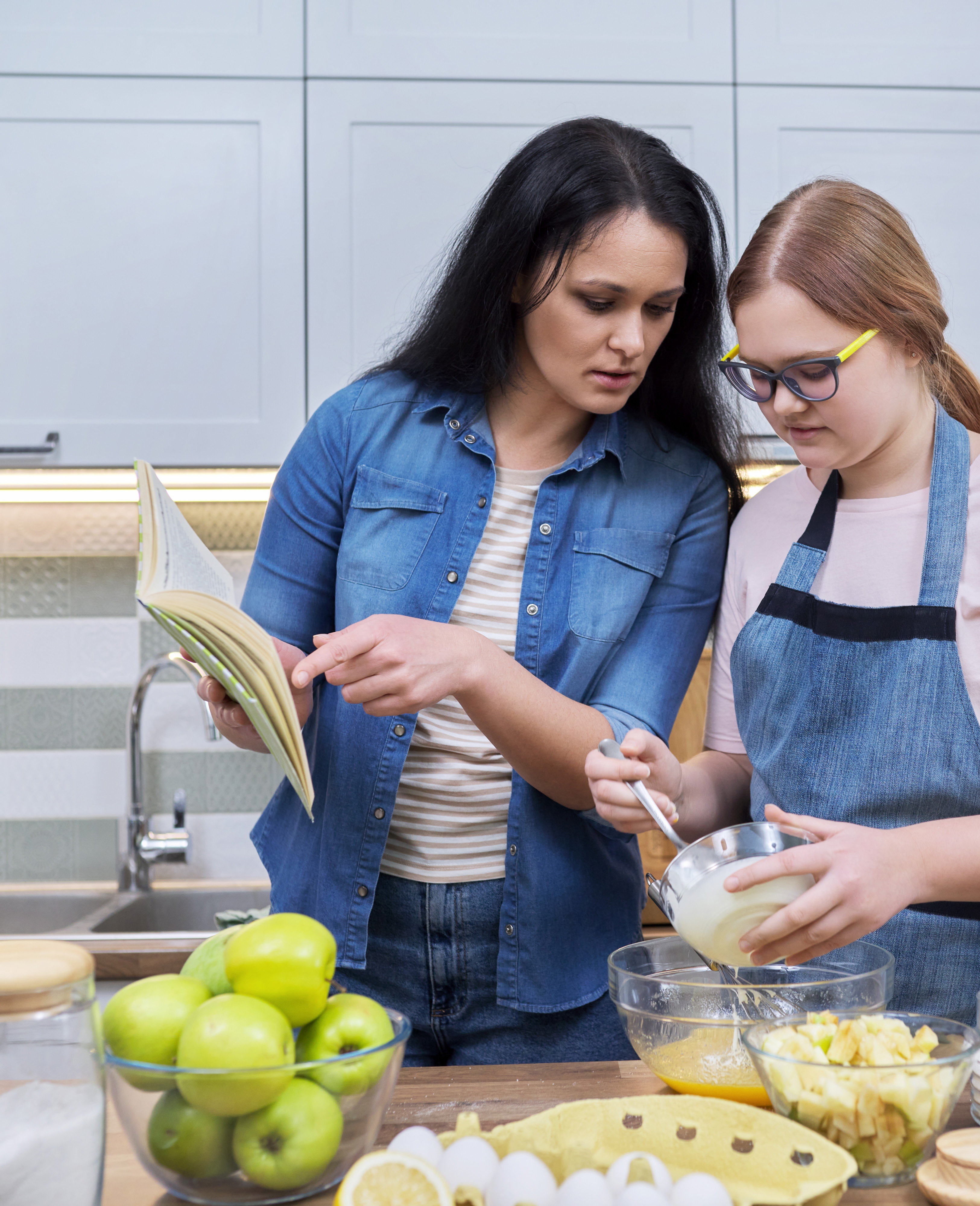
If there was a way to cook without having to do dishes, I’d probably like it a whole lot better. What about you? Regardless, I like to eat, so I cook... begrudgingly lol.
Even better than cooking, I LOVE to bake. Those dishes are more worth it! And, depending on what it is, I like to bake with other people. My grandma died earlier this year, but I have some good memories of being with her in the kitchen. So, although this article isn’t about soft, feel-good memories, enjoy those in the process — they are another chance to learn.
In the US, the four major subjects covered in high school include: math, English, science, and history. I like the first three, but I’m not a fan of the fourth. However, if history can be included in something I enjoy, I get more interested. That’s the same for you and your teens, no matter the subject!
So if you have a teen who’s not really interested in school, I hope some of the following ideas will stoke some interest either because he or she is spending time with you or because the cooking element makes it more fun to learn. Learning doesn’t have to be boring; it’s all about tying in your interests or your teen’s to something you want to learn about.
Math
Let’s start with math. I tutor middle school math, and I can do higher maths, but I’m not so skilled in the higher maths that I can answer a question if it’s not done the way I know. Good teachers and tutors know that there is often more than one way to get to the solution — good cooks and bakers know it, too.
Connecting math and cooking is straightforward: changing quantities in recipes. To double or halve a recipe is common. If you have a recipe for a small quantity of something, the reward could be doubling the recipe — a great way to work with fractions. As math classes advance, it’s easy to forget how to multiply or divide fractions, so hands-on recipe work helps.
Measurements and temperature conversions are another chance to practice. My car shows MPH and KPH, but my oven doesn’t show Fahrenheit and Celsius. The equation to get Celsius if you know Fahrenheit is: C = 5/9 (F - 32). Converting between imperial and metric measurements (cups to grams, etc.) is practical math your teen could do — especially useful if a recipe originates in a different country.
With so many people creating Shorts, Reels, and other videos all about cooking, baking, and recipes it’s essential to know your kitchen math, especially if the video creator lives in a different country than you.
English
English lessons can be woven into the kitchen, too. Grammar and vocabulary can be taught with playful tools — alphabet cookie cutters, Scrabble with cookies, or recipe-reading exercises. Cookbooks are more than recipes; they offer context about times, places, and ingredients. A cookbook from 90 or 120 years ago will read very differently than one today, prompting research and discussion.
Turn literature into culinary extensions: books that feature food or food-centric stories can lead to discussions and cooking projects. For example, The Particular Sadness of Lemon Cake explores emotional connections to food — a prompt to ask whether the foods we cook reflect how we feel.
Science
Science is easy to incorporate through cooking, especially chemistry. Demonstrate states of matter with water (liquid), steam (gas), and ice (solid) — or cake batter (liquid) turning into cake (solid). Discuss homogeneous vs. heterogeneous mixtures, or run a simple kitchen experiment for a science fair.
A reliable kitchen demonstration is making a buttermilk substitute: milk plus vinegar or lemon juice — an acid-base practical showing chemical reaction and substitution. Butter is another great example: it demonstrates both physical and chemical changes and connects to history as well.
Butter is a great transition between science and history. It’s been around for a very long time and can teach your teen about both physical and chemical changes.
History & Music
Music and history can pair well in the kitchen. My mama sings when she cooks — tunes full of “la, la”s from cartoons she remembers. She also sings about “goober peas,” and when I asked what that was, she said, “Peanuts.” The song about goober peas ties directly into history: Confederate soldiers used peanuts as an easy, portable protein source during the Civil War.
That history opens questions about where foods originate. Peanuts, for instance, come from central South America, traveled to Brazil, then via traders to Africa, Asia, Europe, and eventually the United States. Researching ingredient origins can spark geography and history lessons tied to recipes.
Practical Ideas & Family Stories
Bring teens into the kitchen for practical tasks — measuring, timing, temperature control, conversions, reading recipes, and critical thinking when ingredients are missing or substitutions are needed. Family recipes and memories (my grandma’s proofed cinnamon rolls, stories of cooking during the Depression and Dust Bowl, and makeshift “mock apple pie” recipes) provide cultural and historical context that makes lessons stick.
Cookbooks, old and new, offer windows into changing tastes and available ingredients. Try experimenting: use different ingredients to recreate a historic recipe, compare methods, and encourage discussion about why changes occurred.
Reading about food, trying recipes from other eras or regions, and turning kitchen time into small research projects are all ways to help teens practice math, science, English, and history without feeling like formal schoolwork.
There are easy, everyday ways to use cooking to help your teen (and yourself) learn. When asked whether a lesson can be included with how to cook, the answer is “Yes.” Include one or two simple teaching moments each time you cook, and learning will happen everywhere, every day.